

I once watched a game change its entire emotional register by shifting a single color relationship.
No new character appeared. No line of dialogue was spoken. The camera did not even move. A cool blue that had sat quietly in the shadows simply warmed by a few degrees, and the space that had felt distant suddenly felt closer, almost watchful. The change lasted less than a second. I still remember the exact temperature of it.
Dialogue can explain a feeling. A well-chosen palette can deliver the feeling before explanation becomes necessary.
Color as primary information
Most games treat color as atmosphere or branding. A limited set of hues is chosen because it looks cohesive in screenshots. The better uses go further. They treat the palette as a system of emotional and spatial signals that operate underneath, and sometimes instead of, language.
A desaturated ground with one precise accent can tell you what matters in a frame more efficiently than a character pointing or speaking. A sudden restriction of the palette—removing warmth, collapsing contrast—can communicate loss or disorientation without a single word of exposition. Expanding the range again can feel like relief even when the story has not yet resolved anything.
These shifts work because they speak directly to the part of attention that does not wait for sentences. The eye registers temperature and relationship first. Language arrives later, if it arrives at all.
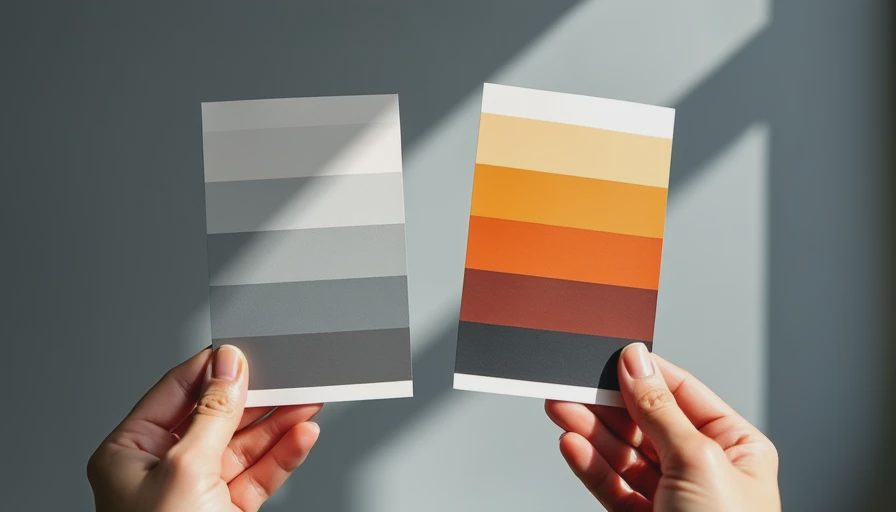
When words become secondary
There are moments when dialogue, no matter how well written, arrives too late or too heavily. A character can say they feel isolated, and the line can be true, and still land with less force than a palette that has already removed every warm note from the environment and left the remaining colors slightly too far apart.
I have played sequences where the most honest information in the scene was not in the subtitles. It was in the way the shadows had lost their previous depth, or the way a recurring accent color had been allowed to fade until it was almost continuous with the background. The dialogue continued, competent and clear. The color had already finished the real sentence.
This is not an argument against writing. It is an observation about sequence and priority. When the visual system is precise enough, language does not have to carry the full weight of mood. It can afford to be quieter, more specific, or even absent.
The discipline of limitation
A strong palette is rarely the one with the most colors. It is usually the one that has decided, with some severity, what it will refuse.
Refusing certain temperatures keeps a world coherent. Refusing high saturation in one region of the spectrum can make a later return of that saturation feel earned rather than decorative. The restrictions become a grammar. Once the player has absorbed the rules—often without noticing—the smallest deviation registers as meaningful.
I notice this most clearly in games that trust their palette enough to let long stretches pass without verbal reinforcement. The color continues to speak. The player continues to understand. The absence of dialogue does not feel like a gap; it feels like confidence.
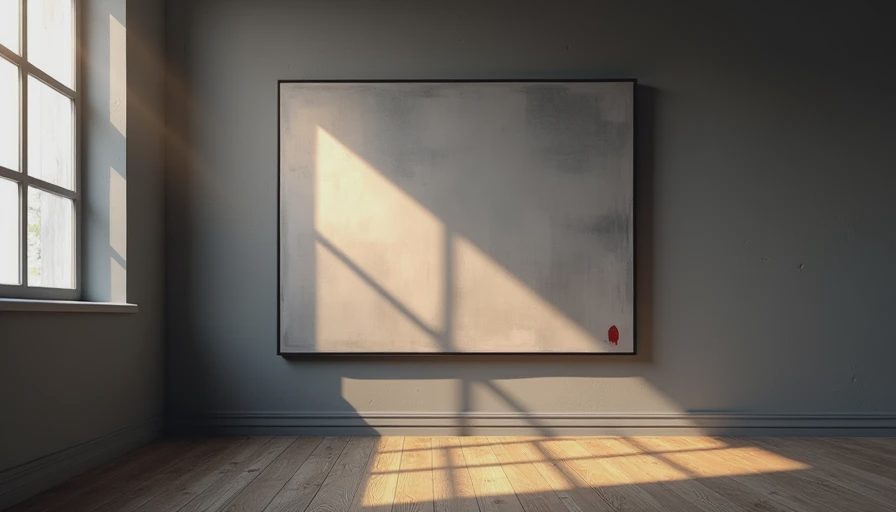
Residual temperature
After the screen goes dark, dialogue tends to fade into paraphrase. You remember the idea of what was said. Color often remains more intact. A particular relationship between a cool shadow and a warm edge, or the exact gray that sat under a dying light, can return days later with surprising clarity.
That residual temperature is one of the reasons certain games stay. Not because they explained themselves well, but because they adjusted the air in the room and then trusted you to notice.
Color cannot replace every function of language. It cannot argue a complex idea or deliver specific information about plot. What it can do—when handled with intention—is establish the emotional weather of a moment so completely that dialogue is free to do less, or to do something more precise.
Sometimes the most accurate thing a game can say is not said at all.
It is simply allowed to change the color of the light.