

Some games spend their opening hour still deciding what they are.
The lighting searches for a temperature. The sound design tests a few different weights. The camera tries on distances. You can feel the uncertainty even when the systems are already working. The world is present, but it has not yet committed.
This one had already committed before I finished the title screen.
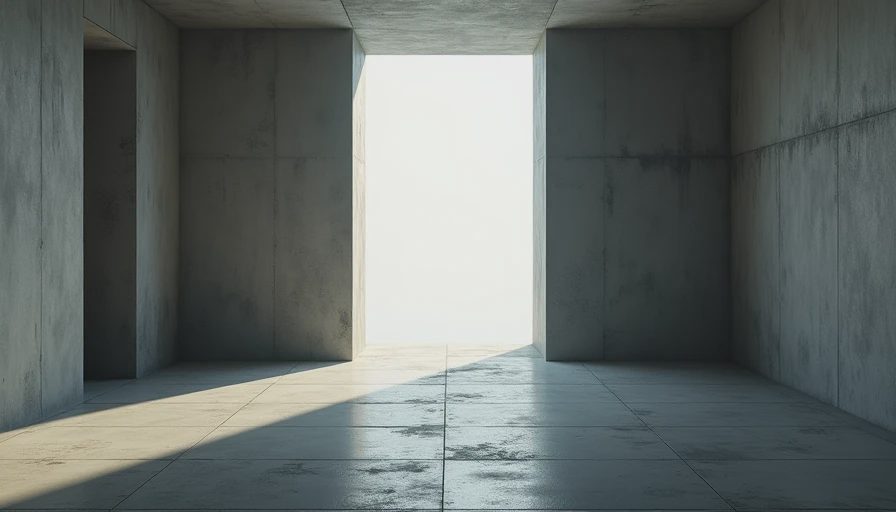
The mood was not announced. It was simply present—settled, specific, and unwilling to negotiate. A particular density of quiet. A controlled coolness in the light. A sense that the space had been waiting at this exact emotional register and saw no reason to adjust for the player’s arrival. I did not have to interpret it. I only had to notice that the decision had already been made.
The difference between atmosphere and certainty
Atmosphere is common. Many games can produce a pleasant or interesting fog of feeling. Certainty is rarer. It shows up as a refusal to hedge.
In this game the palette did not offer a range of possible readings. It offered one coherent temperature and held it. The spacing of elements did not feel exploratory. It felt decided. Even the way sound decayed in the environment carried the same conviction: this is how far an echo is allowed to travel here, and no farther.
That kind of clarity does not require darkness or intensity. It only requires that the designers have already answered the question of what the experience is supposed to feel like, and then protected that answer from the usual impulses to soften, diversify, or explain.
What arrives early
Because the mood was already fixed, the early minutes felt less like a tutorial and more like an introduction to a place that existed independently of me. I was not being taught how to feel. I was being allowed to enter a feeling that had been prepared in advance.
There is a particular relief in that. So many games are still performing their identity while you play them—showing you their ran

ge, proving they can do multiple tones, making sure nothing is left unexpressed. This one seemed uninterested in range. It had chosen its weather and intended to stay inside it.
The result is a stronger sense of place. When a game knows its mood with this level of precision, the world stops feeling like a sequence of designed moments and starts feeling like a continuous climate.
The risk of knowing
There is a risk in this approach. A game that commits so early can feel narrow to players who want variation or emotional spectrum. It can also feel stubborn. But the alternative—mood that remains provisional—often produces a thinner residue. You finish the experience having sampled several temperatures and retained none of them strongly.
Here the opposite happened. Because the register never wavered, the feeling had time to accumulate. Small variations inside the established mood became noticeable precisely because the baseline was so stable. A slight shift in light or distance registered as meaningful instead of merely decorative.
After the screen
I left the game carrying a very clear residual climate. Not a plot point. Not a mechanical insight. Just the memory of a particular quiet density and the exact coolness of its light.
That is what decisive mood can do. It does not need to persuade you of its importance. It simply remains, consistent enough that the body keeps a record of it.
Most games are still searching for the feeling they want to leave you with.
A smaller number have already found it, and spend the entire runtime protecting it.
This one belonged to the second group.
It knew exactly what mood it wanted.
And it never once acted as if it might change its mind.