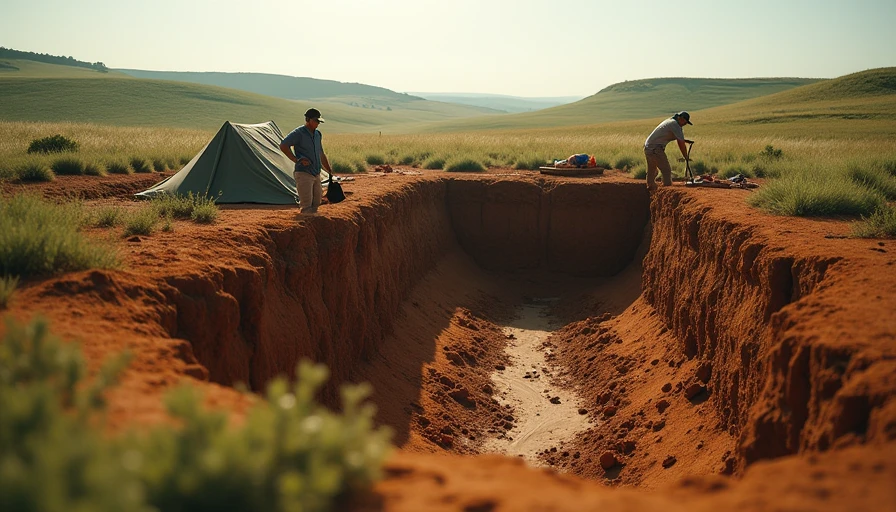
The excavation of hob's barrow begins with a simple professional question: what is buried beneath an old mound in the English countryside? From there, the game opens slowly, letting mud, local superstition, and uncomfortable silences gather around you. Developed by Cloak and Dagger Games and published by Wadjet Eye Games, it is a point-and-click folk-horror adventure that trusts atmosphere more than spectacle. I came to it expecting a compact mystery and found something closer to a haunted field journal.
You play as Thomasina Bateman, an antiquarian who travels from village to village cataloging burial mounds. She is practical, curious, and somewhat isolated, which makes her a perfect guide through a world where history is never safely behind glass. The central mystery is not only what lies inside Hob's Barrow, but why the people nearby would rather leave it undisturbed.
A first hour built from mud and silence
The excavation of hob's barrow does not rush toward its horror. Its early scenes are made of train rides, damp roads, narrow rooms, and conversations with villagers who seem to have rehearsed their evasions. There are no constant stingers or aggressive musical cues telling you how to feel. Instead, the game gives you a landscape that looks ordinary until one detail sits at the wrong angle.
That patience is the first thing to understand. If you need a game to announce its premise immediately, this one can feel almost stubborn. The opening asks you to notice a locked door, a strange phrase, or a person who stops talking when Thomasina enters a room. Those details accumulate rather than explode. I liked that restraint. It gives the village a social texture before it turns openly threatening.
Thomasina's work also makes the horror feel grounded. She is not a chosen hero carrying a sword through a fantasy kingdom. She is an educated outsider with notebooks, questions, and professional confidence. The gap between what she believes can be measured and what the villagers believe must be feared becomes the game's most effective pressure point.
Pixel art with a weathered edge
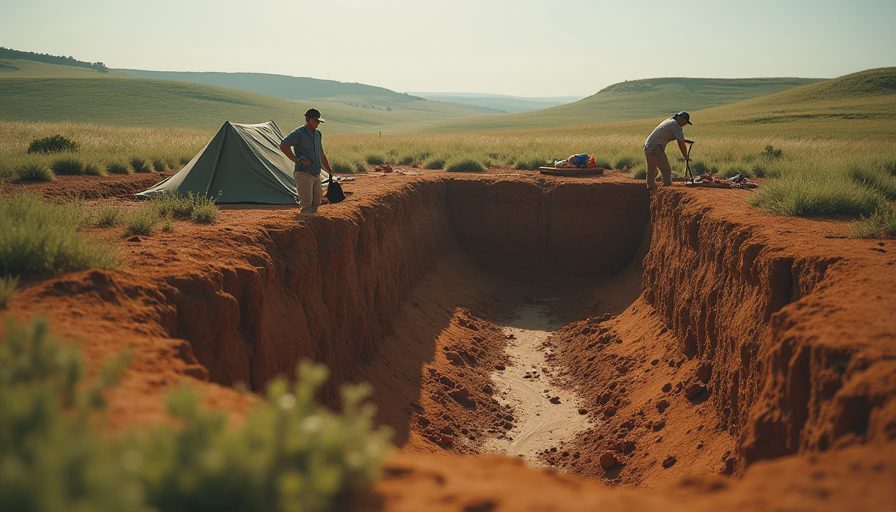
Visually, the excavation of hob's barrow understands that darkness is not the same as blackness. Its pixel art uses muted browns, gray-green fields, candlelit interiors, and occasional red accents to create a world that feels handled and old. The village does not look like a generic horror backdrop. It looks lived in, then slowly contaminated by the things people refuse to discuss.
The character portraits are especially useful. Faces change just enough to make a conversation feel unstable, while the surrounding rooms remain composed and still. A cluttered shelf, a framed document, or a muddy path can carry as much narrative weight as a long explanation. As someone who draws for a living, I kept noticing the composition: figures pushed to the edge of rooms, doorways used like visual traps, and empty space that seems to be waiting for movement.
The interface is deliberately plain. It does not place a thick layer of modern convenience between you and the setting. Looking at an object, trying an item, and speaking to someone feel like actions belonging to Thomasina's world rather than commands floating above it. The friction is mild, but it reinforces the sense that every discovery has to be handled carefully.
Puzzles that reward attention
The excavation of hob's barrow follows familiar adventure-game logic, with inventory items, environmental clues, and conversations that gradually reveal new options. Some solutions depend on noticing an earlier line of dialogue or understanding what a character values. Others ask you to combine objects in a way that feels slightly strange until the context catches up.
It is not a perfect puzzle design. A few steps can feel obscure, particularly when the intended connection depends on a small visual clue or a particular conversational sequence. Still, the game rarely feels like it is padding its runtime with random item combinations. Most puzzles belong to the setting. You are not solving abstract locks; you are navigating customs, fears, old records, and the practical barriers surrounding a burial mound.
That distinction matters. The puzzles make you inhabit Thomasina's investigation instead of merely moving her through scenes. When a solution works, the satisfaction comes less from cleverness than from recognizing the village's internal logic. People have been keeping this secret for a long time, and the game lets that history shape the path forward.

The horror gets stronger when it stays local
What makes the excavation of hob's barrow effective is its scale. The dread begins with a single community and its inherited beliefs. It lives in the pub, the church, the fields, and the strained politeness of a conversation. Even when the story reaches for larger supernatural implications, it remains tied to physical places and human choices.
The game also understands the specific discomfort of excavation. Digging is presented as curiosity, scholarship, and violation all at once. Thomasina wants to preserve the past through research, yet her work requires opening spaces that were sealed for a reason. That tension gives the title more weight than a simple promise of buried treasure. Every layer of earth feels like a question about who has the right to uncover what was left alone.
There is some unevenness in the pacing. The middle can linger on travel and conversation, and the final stretch is more direct than the careful opening suggests. Even so, the gradual structure gives the ending a useful afterimage. I finished it and found myself sketching the barrow from memory, not because it was visually grand, but because it had become an emotional shape: low, dark, and impossible to regard as only soil.
Should you play the excavation of hob's barrow?
The excavation of hob's barrow is for players who enjoy old-school adventure games, restrained folk horror, and stories where atmosphere develops through observation. It is a strong choice for an evening when you want to sit with a strange place rather than conquer it. Expect several hours of reading, searching, and connecting clues, with tension that works best when you let the game set its own pace.
It is less suited to anyone looking for constant action, elaborate character builds, or a clean stream of obvious objectives. This is not a horror game built around chase sequences. Its best tools are implication, repetition, and the uneasy feeling that a harmless local custom has a second meaning.
For me, the recommendation is clear. The excavation of hob's barrow is not flawless, but its artistic choices have purpose, and its quietness never feels accidental. It respects the pleasure of looking closely. If you like your mysteries damp, literary, and slightly cruel, Thomasina's journey is worth the time. If it stays with you, it counts.