There's a specific kind of image that doesn't fade.
Not the ones you screenshot—those are intentional, collected, filed away. I'm talking about the ones you didn't think to capture. The ones that arrived without warning, stayed without asking, and refused to leave when you closed the game.
I've been thinking about those images lately. The frames that lodged themselves somewhere behind my eyes and kept coming back, days or weeks later, at odd moments—making coffee, walking home, lying awake at 2 a.m.
Here are a few of them.
The One That Made Me Forget to Breathe
Koira is a hand-drawn adventure about a woodland spirit and a puppy, told entirely without dialogue. The visuals are minimal but evocative—hand-painted grayscale landscapes with selective use of red. The palette is mostly white, black, and red, with red playing a key role in conveying the story.
But there's one image I can't shake.
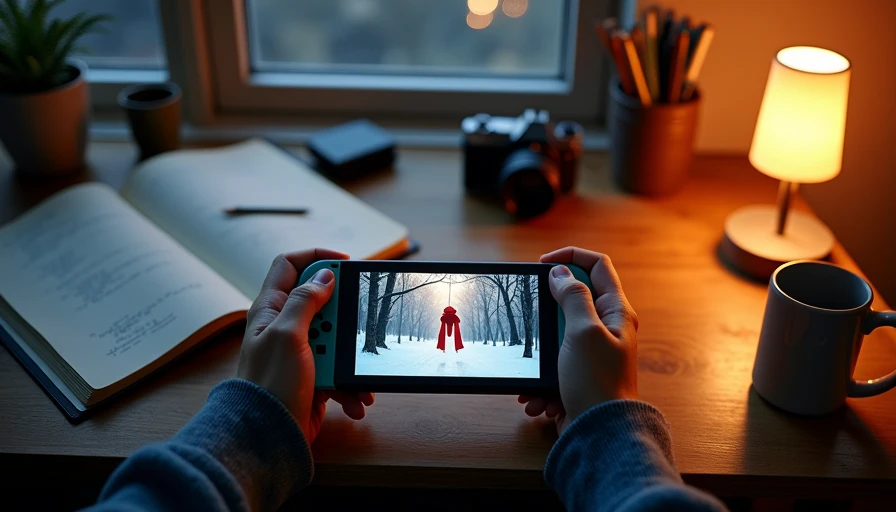
Near the end of the game, you're running through a snow-covered forest. Hunters are closing in. The puppy is ahead of you, bounding through the white. And then—a red scarf, caught on a branch. Just the scarf. Just the red. Against all that white.
I don't remember the puzzle I solved to get there. I don't remember the exact sequence of events. But I remember that scarf. The way it stood out. The way it said everything the game never spoke aloud.
Without uttering a single word, Koira tells a story that illuminates the beauty of friendship. Sometimes the most powerful statement is the simplest one: a single point of color in a world of snow.
The One That Felt Like a Memory I Never Had
Dreamed Away opens on a rainy night, in an empty house. A boy named Théo wakes to find his parents and sister gone. What follows is a surreal, emotional journey that blurs the line between nightmare and memory.
The pixel art is striking in its detail and use of color. Vibrant, peaceful settings contrast sharply with darker, oppressive tones. It's a labor of love that shines through in every pixel.
But the image that stayed with me wasn't a grand setpiece. It was a small room. A single bed. A window showing nothing but rain. Théo standing there, small against the frame.
I've never been in that room. I've never lived that moment. But something about that pixelated bedroom felt achingly familiar—like a memory I never had, or a dream I couldn't quite remember.
There's a power in that kind of image. It doesn't show you something new. It shows you something you already knew, somewhere deep down, and makes you feel it.
The One That Reminded Me Hands Still Matter
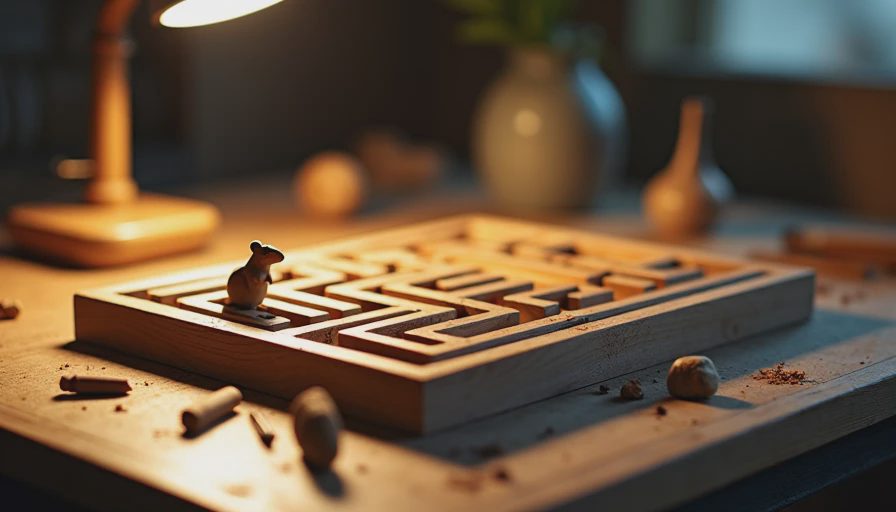
Éalú is something else entirely. A stop-motion puzzle adventure about a wooden mouse trapped in a maze. Every set, prop, and puppet was physically built and animated frame-by-frame. Over 18,000 photos were captured to create more than 512 individual animation clips.
The result is a world where every texture was touched by human hands. The wood grain is real. The lighting was arranged by hand. You can see the fingerprints, the wear, the imperfections that make it feel alive.
The image that stays with me is simple: the mouse, tiny and wooden, standing at the edge of a vast maze. The wood is warm. The shadows are deep. The scale is overwhelming. And yet, the craftsmanship makes it feel intimate rather than cold.
In a world of procedurally generated everything, Éalú is a reminder that hands still matter. That something made by a person—frame by frame, photograph by photograph—carries a weight that no algorithm can replicate.
A few hours of quiet immersion in a world where every texture was touched by human hands. That's what stays.
The One That Let Me Sit With My Feelings
Opus Prism Peak is a photography puzzler from Taiwanese developer SIGONO. You play as Eugene, a middle-aged photographer whose life has been gently falling apart. He wakes up in the Dusklands, a surreal fantasy realm equal parts beautiful and broken.
The art style is hand-drawn and quietly stunning. It's colorful, but there's a melancholy beneath the surface. Comparable to the art of Makoto Shinkai or Ghibli, it captures that essence of fantasy with its lineless art style.
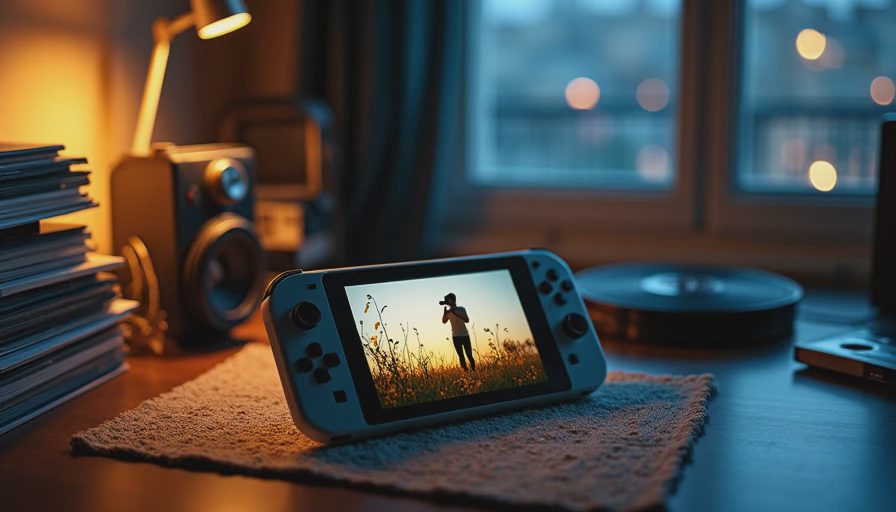
The image I can't shake: Eugene, standing alone in a field of flowers, camera in hand. The light is golden. The flowers sway. And he just stands there—not taking a photo, not solving a puzzle, just being in that space.
Most games would have rushed you to the next objective. Opus Prism Peak lets you sit with the moment. It's the kind of game that sneaks up on you emotionally. And that image—a man alone in a beautiful place, carrying his grief quietly—has stayed with me longer than any action sequence ever could.
What These Images Share
I've been trying to figure out what these images have in common. They're not the most technically impressive frames I've seen. They're not the most colorful or the most detailed. They're not even the ones I would have chosen to screenshot.
But they all share something: they arrived unannounced.
Koira's red scarf against the snow wasn't telegraphed. It was just there, doing its quiet work.
Dreamed Away's rainy bedroom didn't call attention to itself. It was just a room, holding its silence.
Éalú's wooden mouse wasn't framed like a masterpiece. It was just a small thing, standing at the edge of something larger.
Opus Prism Peak's lonely photographer wasn't a cutscene moment. It was just a man, standing still, in a field of flowers.
They didn't announce themselves as important. They simply were. And that's exactly why they stayed.
The Images That Refuse to Leave
I think about this a lot. The images that refuse to leave.
Not the ones you capture. The ones that capture you.
The red scarf in the snow. The rain against a pixelated window. The wooden mouse at the edge of the maze. The photographer alone in a field of flowers.
These aren't the biggest moments in their games. They're not the climaxes or the revelations. They're the quiet in-betweens—the spaces where the game stops doing and just is.
And somehow, those are the ones that stick.