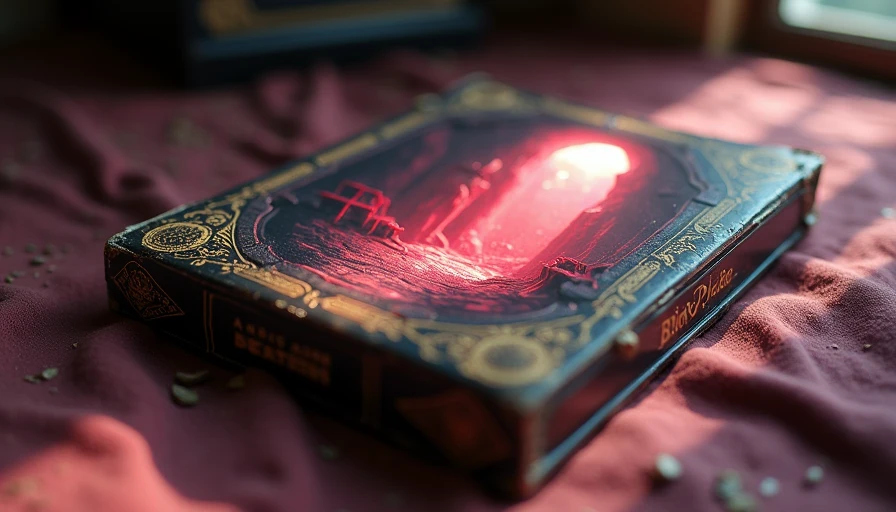
Some game titles arrive already carrying a visual language. Dungeons of Blood and Dream sounds like candle smoke, red stone, half-remembered corridors, and the uneasy feeling that sleep has become a place you cannot leave. For players who look beyond release-day noise, that combination is enough to make a game worth placing on the radar. The real question is whether the idea has substance beneath the atmosphere.
This is not a conventional hype piece. I am interested in what a title like this promises, what mood-first players should look for, and how to decide whether it deserves space in your limited playtime. Dungeons of Blood and Dream is most compelling as a possibility: a dark fantasy experience where image, rhythm, and unease need to work together rather than simply decorate a familiar dungeon.
Why the title creates such a strong first impression
The words “blood” and “dream” pull in opposite directions. Blood suggests weight, consequence, and physical danger. Dream suggests distortion, softness, and logic that shifts when you try to hold it still. Put together, they create an expectation of a world that should feel unstable without becoming visually noisy.
That distinction matters. A lot of dark indie games reach for black backgrounds, red highlights, cracked stone, and oversized monsters. Those elements can work, but they are only the outer shell. The more interesting version uses contrast with intention: a quiet room after a violent encounter, a beautiful object placed somewhere hostile, or a user interface that makes the player feel slightly less secure.
For Dungeons of Blood and Dream, the first hour would need to establish that visual grammar quickly. I would want to see whether the spaces feel authored or procedurally interchangeable, whether enemies belong to the same nightmare, and whether the color palette gives the eye somewhere to rest. Atmosphere becomes memorable when the player can describe not just that a place was dark, but how its darkness behaved.
The difference between mood and substance
A strong mood can get an indie game through its opening session. It cannot carry every hour. Once the initial mystery fades, the player needs actions that reinforce the fiction. Exploration should make curiosity feel useful. Combat, if present, should have a rhythm that belongs to the world. Even a simple inventory or upgrade system can either deepen the fantasy or pull the player back into spreadsheet thinking.
That is where Dungeons of Blood and Dream has the most to prove. A title this evocative invites comparison with atmospheric dungeon crawlers, dreamlike horror games, and compact action adventures, but resemblance is not identity. The game needs a specific answer to a simple question: what does the player do here that could not happen in another dark fantasy setting?
The answer does not need to be complicated. It could be a strange relationship between memory and map design, rooms that change according to the player’s choices, or a combat system built around hesitation rather than constant aggression. Small mechanics often leave the deepest mark when they are repeated with confidence. I would rather see one excellent idea developed carefully than six systems competing for attention.
What art direction should accomplish
As someone who draws for a living, I pay attention to the shape of a game before I start judging its feature list. Silhouette, spacing, animation, and texture tell me whether an artist is guiding my attention or merely filling a screen. A dungeon can be detailed and still feel empty if every wall has the same visual importance.
The strongest version of Dungeons of Blood and Dream would use restraint. Perhaps a narrow corridor compresses the frame, then opens into an exaggerated chamber. Perhaps a creature is recognizable by its posture before its details come into focus. Maybe the dream imagery appears in small interruptions rather than constant surreal decoration. Those choices give a player something to notice and remember.
Sound matters just as much. Footsteps that change across surfaces, a door that opens with a tired mechanical groan, or a melody that disappears when danger approaches can make a modest space feel inhabited. The goal is not maximal horror. It is consistency. If the visual language says the world is unstable, the audio and animation should carry that instability too.
How to judge the game before committing your time
Indie players do not need to treat every intriguing game as a future favorite. A short evaluation can prevent a beautiful premise from becoming an unfinished download. Start with the store page or official presentation and look for footage that shows more than trailers. Can you see ordinary traversal, menus, repeated encounters, and the transitions between rooms? Those details reveal pacing better than a montage of dramatic images.
Next, check whether the game explains its basic structure clearly. You do not need every plot point, but you should know whether it is an action game, a slow exploration piece, a roguelike, a narrative experiment, or some combination. Dungeons of Blood and Dream may appeal to several audiences, but each expects a different kind of commitment. A player wanting a focused four-hour descent will approach it differently from someone looking for dozens of procedural runs.
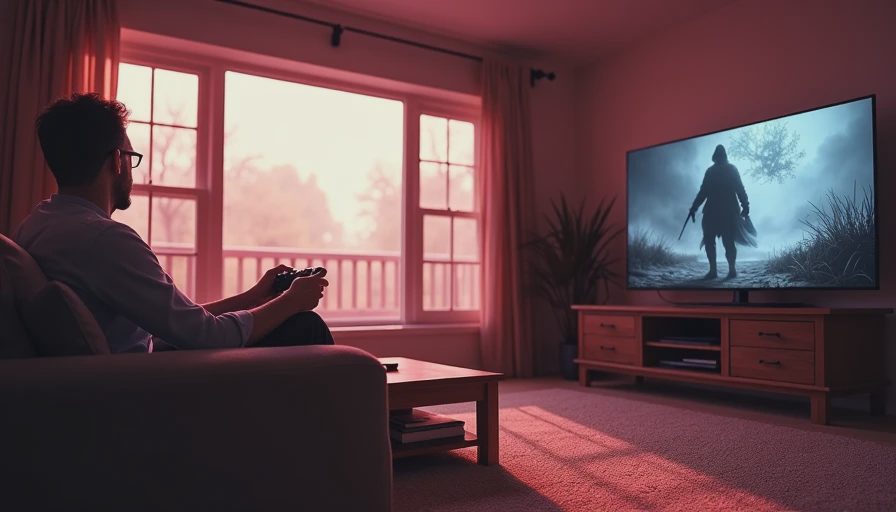
Finally, read player impressions for patterns rather than isolated praise. Comments about atmosphere, controls, repetition, performance, and readability are more useful than a single statement that the game is “underrated.” If possible, use a refund window or a demo to test the opening yourself. Ten deliberate minutes with a controller can answer questions that a long review cannot.
Who should keep it on the radar
Dungeons of Blood and Dream seems aimed at players who value a coherent feeling over a giant content count. If you enjoy walking through a space slowly, noticing how light falls across a wall, and letting a game withhold information without becoming vague, the premise has genuine appeal. It may also suit players who like horror that works through suggestion rather than constant shocks.
It is less likely to satisfy anyone looking primarily for competitive combat, elaborate character builds, or a huge open world filled with checklists. Those are not flaws; they are simply different priorities. A compact game can feel more complete when every room, sound, and encounter supports the same emotional direction.
That is the standard I would bring to this title. Do not ask it to be the next massive action RPG. Ask whether it creates a place with its own temperature, rhythm, and visual memory. If it stays with you, it counts.
Final verdict for patient indie players
Dungeons of Blood and Dream has the kind of name that earns attention before the first screenshot loads. That is a promising beginning, not proof of a finished experience. Its success will depend on whether the mechanics give the dream something solid to push against, whether the dungeon has meaningful variation, and whether the art direction remains legible when the screen becomes busy.
For now, I would place Dungeons of Blood and Dream on a thoughtful watchlist rather than recommend it blindly. Look for gameplay that demonstrates a distinct central idea, a readable visual identity, and pacing that respects the player’s time. If those pieces are present, this could be the sort of small, strange game that rewards a quiet evening more than another loud release. Not loud, just lasting.