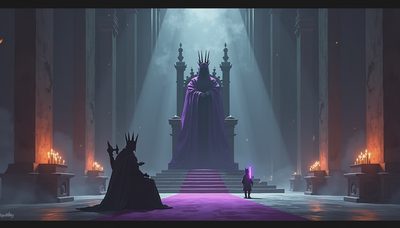
The Buried Pillars is the kind of indie game that asks for attention before it asks for praise. Its appeal is not built around a loud opening, a long list of features, or the promise of endless content. Instead, it sits in that more unusual space where a title, an image, and a small sense of mystery do much of the early work. For players who like games with a strong visual mood, that restraint can be inviting.
I tend to approach games like this slowly. I want to know what the world is asking me to notice. Is the environment merely decorative, or does it shape how movement feels? Does the interface keep me close to the fiction, or does it place a layer of software between me and the scene? The Buried Pillars immediately suggests that space and history matter, even before a player has a clear explanation for either.
A game built around atmosphere
The most interesting thing about The Buried Pillars is the emotional direction implied by its name. “Buried” suggests pressure, age, and something deliberately hidden. “Pillars” suggests structure: supports, boundaries, or remains that still hold a place together. That combination creates a useful expectation. This is not a game I would approach looking for constant motion. I would approach it looking for arrangement, silence, and clues placed at the edge of attention.
That does not mean atmosphere should excuse weak play. A beautiful environment cannot carry a game forever if every interaction feels weightless. The stronger atmospheric experiences understand that mood comes from repetition and response. A narrow passage should change how you move. A distant shape should make you reconsider where you are going. A pause should feel intentional rather than empty.
This is where The Buried Pillars has the most to prove. Its visual language needs to do more than make screenshots attractive. The strongest image should also communicate a question, a threat, or a small invitation to continue.

Why the visual language matters
Indie games often work with limited resources, but limitation is not the same thing as a lack of ambition. A restrained palette can make a single warm color feel important. Repeated shapes can turn architecture into a visual rhythm. Rough edges can suggest age, handmade construction, or a world that has not been polished for the player’s comfort.
When I think about The Buried Pillars, I think less about graphical detail and more about visual decisions. Does the game leave enough darkness around its focal points? Does it use scale to make the player feel small, or does every room flatten into the same readable size? Are its structures meant to be admired, understood, or endured? These questions matter because visual identity changes the way time passes.
A strong art direction gives even a short game a memory. You may forget the exact route through a space, but remember a particular color against stone, a shape seen through a gap, or the feeling of walking toward something that seemed to predate you. If it stays with you, it counts.
Patience over spectacle
The Buried Pillars will likely appeal most to players who do not need every minute filled with rewards. There is a specific pleasure in moving through a game that trusts a quiet image to remain on screen for a little longer. That trust can be difficult for modern games, because many experiences are designed around immediate feedback: points, unlocks, upgrades, and constant prompts.
A slower game changes the player’s responsibility. You begin to read rooms instead of simply crossing them. You notice how sound drops away, how a path narrows, or how an object has been placed slightly apart from everything else. The experience becomes less about clearing a checklist and more about forming a relationship with a place.
That approach will not work for everyone. If you want fast combat, clear progression systems, or a large map packed with activities, this may feel too spare. But players who enjoy walking simulators, environmental puzzles, short surreal adventures, or art-led experiments may find the quiet more generous than restrictive.

What to look for while playing
I would recommend paying attention to three things. First, watch how the game frames transitions. Doorways, stairwells, thresholds, and openings often reveal more about a world than its largest set pieces. A good transition can make a new area feel like a discovery rather than a loading screen with scenery attached.
Second, notice the relationship between scale and movement. If a structure towers over you, does the game make you slow down? If a space is open, does it give you freedom or make you feel exposed? These are small design choices, but they can turn architecture into gameplay without adding another system.
Third, listen for repetition. A recurring sound, color, symbol, or shape can give a mysterious game its internal grammar. It does not need to explain itself immediately. Sometimes recognition arrives before understanding, and that gap is where much of the tension lives.
These details are also useful for deciding whether the game is worth your time. A short experience with deliberate choices can feel fuller than a sprawling one that constantly changes direction.
The right kind of recommendation
I would not recommend The Buried Pillars to someone purely because it is obscure. Obscurity is not a quality, and mystery is not automatically depth. The recommendation depends on whether the game’s restraint produces curiosity or simply withholds information. A carefully composed silence feels different from missing content. A strange environment feels different from an unfinished idea.
The best way to approach it is with modest expectations and a little patience. Do not begin by asking how much content it offers. Ask whether its images connect, whether its spaces have a rhythm, and whether its central mood develops rather than repeating the same first impression. Those are better measures for a compact indie game than a feature count.
If you are choosing between a familiar blockbuster and something more intimate, The Buried Pillars makes sense for an evening when you want to look closely. It is the kind of recommendation I would place beside a sketchbook, a quiet record, or a late walk home: not loud, just lasting.
Who should play The Buried Pillars?
The Buried Pillars is for players who enjoy visual mystery, environmental storytelling, and games that leave room for interpretation. It is especially suited to anyone who has grown tired of being told exactly where to look and what to feel. You will probably get more from it if you enjoy noticing composition, pacing, sound, and the emotional effect of a familiar space made strange.
It probably is not the right choice if you need a heavy progression loop or immediate mechanical variety. There is no shame in that. Games serve different moods, and a quiet work can arrive at the wrong time.
My practical verdict is simple: try The Buried Pillars when you want an atmosphere-first experience rather than another busy checklist. Give it enough attention to establish its rhythm, then judge whether its images and questions keep opening outward. If they do, the game has done something valuable with its limited space. If it stays with you, it counts.