
In a lot of indie discourse, a twist has become a shortcut to seriousness.
If the story turns, if the tone flips, if the final act reframes everything that came before, the game is more likely to be called ambitious. A game that simply continues in the direction it started is often treated as safe, or incomplete, or not trying hard enough.
This preference is understandable. A well-executed reversal can be satisfying. It creates a clean shape that is easy to talk about. But when the presence of a twist becomes one of the main ways we measure depth, other forms of rigor start to look invisible.
The twist as credibility signal
A late revelation does useful social work. It gives players something concrete to discuss. It signals that the designers were thinking on multiple levels. It protects the game from the accusation of being “just” a mood piece or “just” a straightforward story.
The cost is that many games begin to organize themselves around the expectation of that signal. Earlier hours are treated as setup. Emotional registers are kept provisional so they can be overturned. The experience is shaped less by what it wants to be in the present, and more by what it plans to reveal later.
When this pattern hardens into a norm, sincerity can start to look naive. A game that means exactly what it appears to mean risks being read as lacking ambition, even when its craft is careful and its choices are deliberate.
Other ways of being complete
A game can be fully resolved without ever asking the player to reinterpret its premise. It can commit to a single dramatic question and answer it directly. It can maintain one consistent relationship between the player and the world. It can refuse the pleasure of the rug-pull and still be exacting about pacing, character, and structure.
These choices are not easier. In some ways they are harder to defend, because they offer fewer conversational handles. There is no moment that neatly divides the experience into “before” and “after.” The work has to hold attention through accumulation and clarity rather than through surprise.
Some of the most durable indie games of the last decade do exactly this. They do not hide a second game inside the first. They simply execute the game they are with precision and then stop. Their completeness comes from coherence, not from recontextualization.

What the demand for twists crowds out
When players and critics are primed to look for the turn, other qualities become harder to notice: the discipline of staying inside one tone, the courage of an ending that does not escalate, the quiet satisfaction of a story that trusts its own premise enough not to betray it.
It also encourages a certain kind of design anxiety. Teams begin to worry that without a late inversion the project will be dismissed as slight. The result is often an ending that feels obligated rather than inevitable—an attempt to satisfy an external standard of “depth” rather than the internal logic of the work.
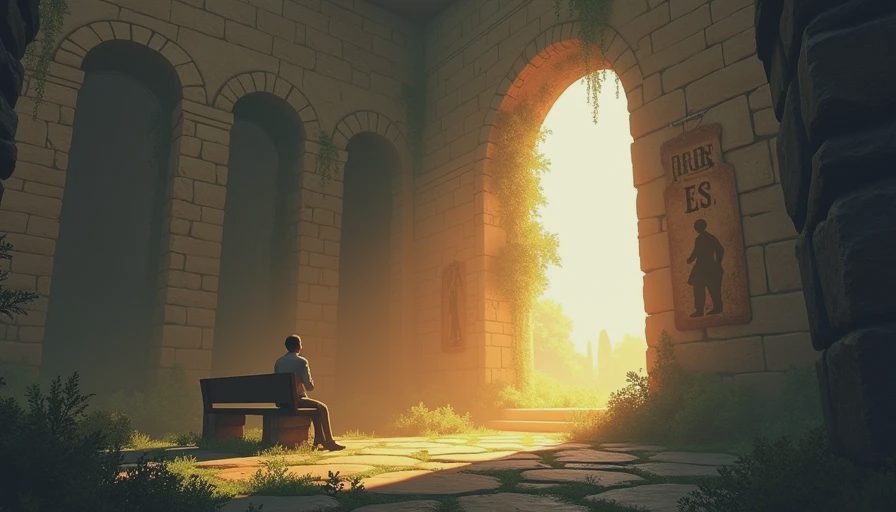
A simpler standard
A great indie game does not need to prove it is smarter than its own first hour.
It needs to know what it is doing, and to do it all the way to the end.
Some games achieve this by turning the table.
Many others achieve it by never needing to.
Both approaches are legitimate. Only one of them has become the default badge of seriousness. The other deserves to be recognized as equally complete—not as a lesser version of the first, but as a different and equally valid form of finish.