If you have ever browsed Steam and wondered, whats an indie game actually mean, the short answer is simpler than the online arguments suggest. An indie game is generally made by an independent developer or small studio without the full financial control of a major publisher. That freedom can produce something tiny and rough, or something as polished and expansive as Hades. The label is less a guarantee of quality than a clue about how a game came into the world.
What makes a game independent?
When people ask whats an indie game, they are often asking about size. A solo developer working from a bedroom is clearly independent, but so is a small studio with twenty or thirty employees. The important detail is usually ownership and funding. An independent team makes decisions without being a direct part of a large platform holder or entertainment company such as Nintendo, Sony, Microsoft, or Electronic Arts.
That does not mean every indie developer works completely alone. A studio might use a publisher for marketing, distribution, or funding while keeping creative control. Supergiant Games has released its own work with a strong independent identity, while studios such as Annapurna Interactive partner with developers in ways that blur the old line between “indie” and “published.” The business arrangements differ, but the creative distance from the blockbuster system often remains meaningful.
Independence also exists on a spectrum. A two-person team can spend years building a pixel-art adventure, while a larger studio can make a game with the budget and production values of a mainstream release. The useful question is not whether a game looks small. It is whether its ideas feel shaped by a particular group of people rather than by a committee designed to minimize risk.
Why do indie games feel different?
The best answer to whats an indie game is often found in the feeling of playing one. Independent games tend to have room for unusual pacing, specific visual choices, and mechanics that would be difficult to justify in a major franchise. A publisher may ask for a familiar genre, a longer campaign, or a monetization plan. A small team may instead follow one strange idea until it becomes the entire shape of the game.
Look at Kentucky Route Zero, where empty roads, theater stages, and quiet conversations create a mood closer to magical realism than conventional adventure design. Look at Return of the Obra Dinn, whose stark monochrome art is not just a visual gimmick; it makes every face, deck, and frozen moment feel like evidence. In both games, the form supports the feeling. The interface, color palette, and rhythm all seem to belong to the same thought.
That specificity is why indie games can feel intimate. A game does not need a massive map to make a place memorable. In A Short Hike, a small mountain park becomes generous through gentle movement and ordinary encounters. In Papers, Please, repetition and bureaucratic paperwork turn a narrow desk into a moral pressure chamber. The scale is modest, but the emotional space is not.
Examples that clarify the label
If whats an indie game still feels abstract, a few examples make the range clearer. Stardew Valley was largely created by Eric Barone, who built the farming and life-simulation game over several years before its release. Its pixel art and simple premise hide an unusually warm sense of place, from the changing seasons to the small routines of its residents.
Celeste, developed by Maddy Makes Games, combines precise platforming with a story about climbing a mountain while confronting fear and self-doubt. Its challenge is demanding, but the difficulty has an emotional purpose. The repeated climb becomes part of the narrative rather than a separate obstacle placed beside it.
Hades shows that independence does not require a crude presentation or a tiny design. Supergiant built a fast, colorful action game with professional voice acting, expressive animation, and a story that responds to repeated failure. It feels authored down to the last detail, from the red-and-black architecture of the underworld to the changing relationships in the House of Hades.
These games are not alike in genre or budget. What connects them is a clear point of view. Each knows what it wants to make the player feel, and each lets that intention influence the mechanics rather than treating atmosphere as decoration.
How to find indie games worth your time
Knowing whats an indie game does not mean you should play every title with a handmade logo and a pixel-art screenshot. Discovery works better when you start with the kind of attention you want to give. If you have two quiet evenings, a three-hour narrative game such as A Short Hike or Inside might fit better than a fifty-hour role-playing game. If you want a strong visual hook, look for games with a consistent palette, unusual animation, or an interface that communicates personality before the opening tutorial ends.
Read reviews that describe play rather than simply announcing that a game is “beautiful” or “fun.” Ask what you actually do minute by minute. Does the game rely on exploration, dialogue, aiming, building, deduction, or repeated attempts? Does its mood come from meaningful design, or only from a muted color filter and a piano soundtrack?
The Steam discovery queue can help, but I usually pair screenshots with a short gameplay video. Screenshots reveal composition; video reveals rhythm. It is also worth checking itch.io when you want experiments that have not been polished for a wide commercial audience. Some projects are unfinished, but unfinished does not always mean empty. A ten-minute prototype can contain one sharper idea than a bloated release.
What indie does not automatically mean
The phrase can carry a little too much romance. An indie game is not automatically more creative, more ethical, or more enjoyable than a major release. Small teams can repeat trends, mishandle a promising concept, or release something that needed another year of work. Limited resources sometimes create charm, but they can also produce weak accessibility options, uneven performance, or confusing interfaces.
The better habit is to separate independence from quality. Ask whether the game respects your time, whether its mechanics support its subject, and whether its art direction has a reason to exist. A rough edge can feel human when it belongs to the design. It feels different when it simply prevents you from understanding what to do.
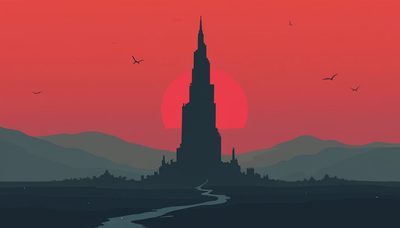
So, whats an indie game in the way that matters to a player? It is a game with enough creative independence to follow a distinct voice, whether that voice is playful, severe, cozy, strange, or quietly sad. Some will pass through your attention in an afternoon. Others will leave an image behind: a red mountain at dusk, a lonely office, a road disappearing into fog.
That is how I judge the label. Not by team size, store tags, or how loudly a game announces its originality, but by whether the work feels considered. If it stays with you, it counts. Not loud, just lasting.