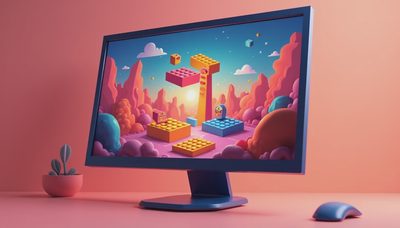
There is a particular kind of pleasure in golfie: lining up a shot, noticing the angle is slightly wrong, and deciding whether to rescue the ball or commit to the mistake. It is not a golf simulation, and it is not really trying to be one. Instead, it turns miniature golf into a compact roguelike about improvisation, card choices, and the quiet satisfaction of understanding a space.
I came to golfie expecting something light enough to play between larger games. That part was true. What surprised me was how often its visual language and small decisions stayed in my head afterward. The courses are bright, strange, and a little toy-like, but the game underneath has a firm sense of rhythm. Each run asks for attention without demanding a whole evening.
What makes golfie different
The basic idea is easy to explain. You move a ball through a series of procedurally arranged courses, trying to reach the hole while managing a limited number of strokes. Before each shot, you choose from cards that alter what the ball can do. One card might add power, another might give the ball a different trajectory, and another might help correct a shot that is already drifting toward trouble.
That card system gives golfie its identity. A normal mini-golf game asks whether you can read the course and control your aim. This one also asks whether you have built a useful hand for the problem in front of you. A narrow ramp, a moving obstacle, or a long gap becomes a question of resource management. You are not simply attempting the ideal shot; you are working with the tools the run has dealt you.
The result feels closer to a deckbuilding puzzle than a sports game. There is still a physical sense of weight and momentum, but every swing carries a little strategic context. When a plan works, it feels earned. When it fails, the reason is usually visible enough to teach you something.
A calm surface with a sharp center
The presentation is one of golfie's strongest qualities. Its floating courses look like small dioramas assembled from colorful blocks, ramps, hazards, and patches of open space. The shapes are readable without being bland. Bright surfaces make the ball easy to track, while exaggerated obstacles give each hole a simple visual silhouette.
I especially like how little the game needs to say. It does not cover the screen with elaborate menus or dramatic effects. The interface sits quietly around the course, leaving room for the shot itself. That restraint matters because golfie is fundamentally a game about looking. You study the slope, the distance, the bounce, and the possible consequences before making a decision.
There is a pleasant contrast between the cheerful palette and the occasional frustration of a bad run. A ball can disappear into a hazard after a shot that looked reasonable. The game does not treat that moment as a tragedy, though. You reset, review the angle, and try to carry the lesson into the next course. The mood stays playful rather than punishing.
The pleasure of building a better hand
The deckbuilding is not deep in the same way as a large card roguelike, but it is well matched to the scale of the game. During a run, you collect new shot cards, improve useful ones, and decide which options are worth keeping. Some cards help with precision, while others encourage more forceful or unusual approaches.
That creates small stories of adaptation. Early in a run, I might rely on safe, direct shots. Later, a strange combination of bounce, spin, and extra movement can turn a difficult hole into a shortcut. The best moments in golfie come when a card stops feeling like an abstract upgrade and starts feeling like a physical tool. You are no longer thinking about numbers. You are thinking about how the ball will behave when it hits the wall.
The system also gives failure a purpose. A run that ends badly can still reveal which cards were too situational, which routes were risky, or which habits need to change. That is a good structure for short sessions because progress is measured in understanding as much as unlocks.

Where the friction shows
Golfie is not perfectly smooth. The aiming and power systems can take time to read, especially when a course combines elevation with a narrow landing area. A shot that seems visually clear may have more nuance than the interface communicates. Players looking for precise, simulation-style control could find the early hours imprecise rather than expressive.
The procedural structure can also produce uneven runs. Some courses fit together beautifully, creating a natural sequence of decisions. Others feel like functional challenges placed next to one another. That inconsistency is part of the roguelike format, but it can soften the sense of place. You remember the clever hole more clearly than the run surrounding it.
Still, these issues rarely erase the central appeal. golfie is small enough that its rough edges do not become exhausting. If a run feels awkward, you can step away and return later without needing to relearn a dozen systems.
Who should play golfie
This is a good fit for players who enjoy low-pressure experimentation. If you like deckbuilders but want something more tactile, golfie offers cards that behave in space rather than simply changing combat values. If you enjoy golf games but do not want a serious simulation, it gives you the satisfying parts of aiming and momentum without forcing you to study real-world technique.
It also suits players who care about atmosphere. The game does not have a large narrative or a huge world to explore, but it has a clear visual temperament. Its courses feel like playful objects on a desk, and its sound and pacing leave enough silence for concentration. I can imagine opening it after work, playing a few holes, and stopping before the session turns into a commitment.
Players who need a strong story, competitive multiplayer, or highly predictable level design should look elsewhere. golfie is more interested in the texture of a run than in delivering a carefully authored campaign.
The final read
Golfie works because its parts point in the same direction. The cards encourage experimentation, the courses reward careful observation, and the presentation keeps everything light enough to approach again after failure. It is not a groundbreaking golf game, and it does not need to be. Its ambition is more modest: make each shot feel like a small problem worth solving.
For me, golfie earns its place as a thoughtful indie recommendation because it respects both curiosity and time. You can play it casually, but the better you look, the more detail it gives back. Start it when you want a game with a clear visual identity, gentle pressure, and just enough uncertainty to keep a familiar shot interesting.
If it stays with you, it counts. golfie does.