There's a particular quality I keep coming back to in indie games. It's not polish, not fidelity, not even beauty in the conventional sense. It's a kind of hand-touched feeling—the sense that someone's actual hands were involved in making what you're looking at. That the lines were drawn by a person, not generated. That the textures carry the grain of real materials. That every frame was considered, not calculated.
Most games look manufactured. These look made.
Here are seven indie games that feel hand-touched in the best possible way—each one carrying the visible, unmistakable mark of its maker.
1. Constance — Painterly Motion
Constance is a 2D hand-drawn action adventure where you play a paintbrush-wielding artist trying to escape her own decaying inner-world. The hand-drawn graphics and story about fighting inner fears create a rare combination of soulfulness and gameplay drive. The game's watercolor palette shifts and bleeds as the protagonist's mental state fragments. You can see the brushstrokes. The ink lines aren't perfect—they're human. There's a looseness to the animation that feels like watching a living painting.
It's been called "Hollow Knight for girls" by players, but that comparison undersells what Constance actually does visually. It doesn't just look hand-drawn. It looks painted. The difference matters.
2. Judero — Clay and Fingerprints
If you want to feel the literal grain of human touch, play Judero. Developed by Talha Kaya and Jack King-Spooner, this action-adventure game melds Scottish folklore with handcrafted artistry. All character assets were initially crafted in clay or stop-motion puppetry, then digitized into the game world—complete with fingerprints, textures, and the grain of real materials.
You can see the thumbprints. You can see where the clay was pressed and shaped. It feels like a film by Aardman Animations crossed with a Celtic myth book you found in a secondhand shop. The cutscenes use stop-motion techniques to heighten the handcrafted atmosphere. It's uneven, yes—the combat isn't the sharpest—but as an experience, it's a video game made from clay, myth, and artistic heartbeat.
3. Harold Halibut — Ten Years of Glue and Fabric
Some games are made in engines. Harold Halibut was made in a workshop.
The small indie studio Slow Bros from Cologne worked on this for over ten years. Everything in the game was painstakingly carved, glued, kneaded, sewn and screwed together by hand before being transferred to the Unity Engine using photogrammetry. The result looks like a cross between Aardman's early Wallace & Gromit animations and a puppet theatre.
Textiles appear rough or fluffy. Metal corridors feel tactile. Clothing has weight. You're not looking at a digital approximation of a handmade world—you're looking at photographs of an actual, physical, handmade world, rendered in game form. It's stop-motion as game, and it's extraordinary.
4. Éalú — Stop-Motion in a Garden Shed
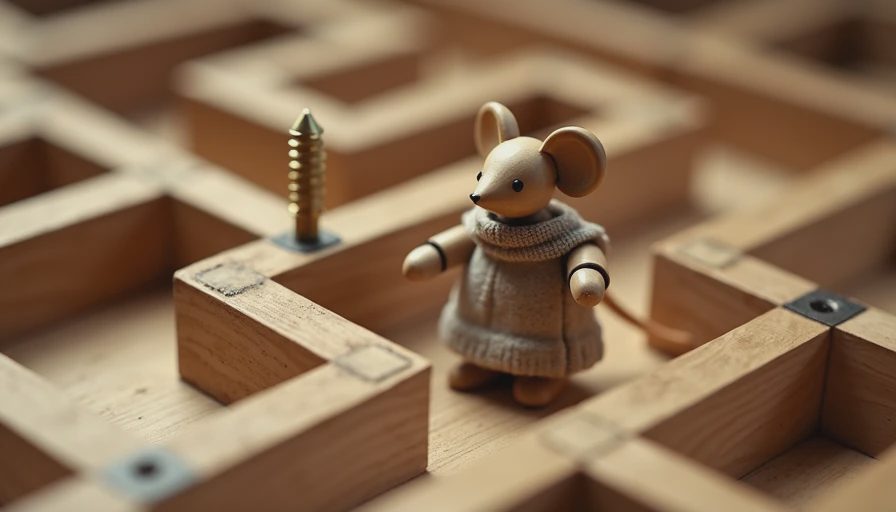
Éalú—Irish for "escape"—is a haunting stop-motion puzzle adventure about a wooden mouse trapped in a maze. The visuals were created entirely by hand inside a garden shed. Every set, prop, and puppet was physically built and animated frame-by-frame. Over 18,000 photos were captured to create more than 512 individual animation clips, all by a single animator.
No sprites were used for the mouse. Every movement of the character was animated using real sets and physical props. The wood grain is real. The lighting was arranged by hand. The whole thing feels like a silent film or a symphony—every element chosen to elicit wonder and unease. It's true, old-school stop-motion, and you can feel every frame of it.
5. Keeper — A Story Without Words
Keeper is a visual dreamland that launched on Xbox Game Pass in October 2025. It's described as "a story without words", and its landscapes and characters are among the most compelling you'll find. The art design is bold, original, and deeply atmospheric.
What makes Keeper feel hand-touched isn't brushstrokes or clay—it's intention. The game communicates entirely through visual language. Every composition is considered. Every color choice carries weight. It's a reminder that "hand-touched" doesn't always mean "traditional"—it can also mean deliberate. The world is always dazzling, and it stays with you long after the screen fades.
6. Artis Impact — Pencil, Watercolor, and Heart
Artis Impact is a cozy pixel art RPG made entirely by a solo developer over four years. It stands out immediately with its lush, handmade aesthetic. Every scene is drawn with pencils and watercolors on cardboard, then scanned and processed.
You can see the paper texture. You can feel the watercolor bleeding at the edges. It's pixel art that carries the warmth of physical media—a strange and beautiful hybrid of digital and analogue. The game blends turn-based combat with slice-of-life elements, and the visual style shifts between cute small-head portraits and more serious, comic-style cutscenes. It feels like playing inside someone's sketchbook.
7. World of Dabado — Cardboard and Colored Pencils
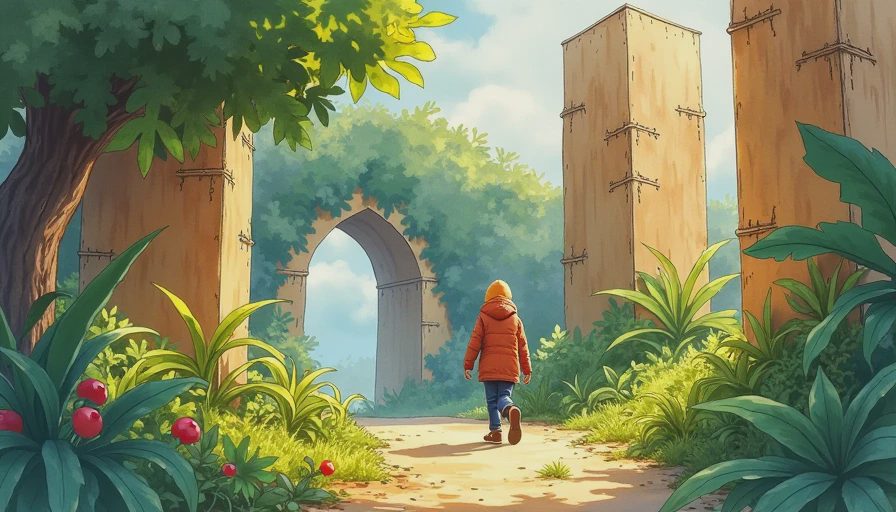
World of Dabado is a hand-drawn, story-driven exploration RPG where all scenes are drawn with pencils and watercolors on cardboard, then scanned and processed. The result is a game that looks like it could have been illustrated by a particularly talented kid with a big imagination and a lot of art supplies.
The cardboard texture is visible. The pencil lines are loose and expressive. The watercolor washes bleed into each other in ways that digital tools can't quite replicate. It's not polished—and that's exactly the point. It feels like something that was made because someone wanted to make it, not because someone was paid to produce it.
What They Share
None of these games look like they were generated. None of them feel like they were assembled from prefabricated parts. They all carry the marks of their making—the brushstroke, the fingerprint, the wood grain, the watercolor bleed, the clay thumbprint.
That's what "hand-touched" means to me. Not perfection. Not polish. Presence. The sense that a person was there, making decisions, pushing material around, leaving traces of themselves behind.
If it stays with you, it counts. And these games—each in their own way—stay.