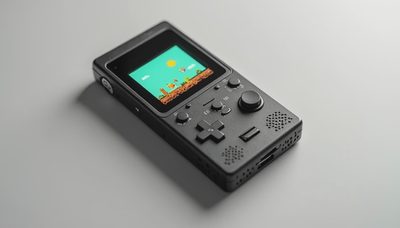

I have a habit that most review culture would probably call impatient.
I play the first hour of a game with unusual attention, then I stop. Not because I’m bored, but because that hour has already told me almost everything I need to know about whether the game understands itself.
Reviews can list systems, compare it to other titles, and assign a number. What they rarely capture is the quiet confidence—or the quiet uncertainty—that a game reveals the moment you begin moving through its world. That early stretch is where art direction, interface, pacing, and emotional temperature all declare themselves before the story has time to explain anything.
What the first hour actually shows
In the opening sixty minutes, a game has to decide how it wants to be looked at.
Does the color palette feel deliberate or merely competent? Does the interface create distance or invitation? Does the way your character moves through space feel considered, or does it feel like a default? These are not minor details. They are the earliest evidence of whether the people who made the game were paying attention to feeling as carefully as they were paying attention to features.
I notice the weight of a cursor. The temperature of a shadow. The amount of empty space the designers were willing to leave. I notice whether the UI treats me like a visitor or like someone already inside the world. These signals arrive long before any plot twist or mechanical depth is revealed, and they are usually more honest than either.
A game that is visually confident in its first hour tends to remain confident. A game that feels uncertain or over-decorated in those opening minutes rarely recovers the ground it lost. The first hour is not a preview. It is a thesis statement delivered in atmosphere instead of words.
Why reviews often miss this
Most reviews are written after the full experience. That is their strength and their limitation. By the time a reviewer reaches the end, they are evaluating the complete structure—the arc, the systems, the resolution. The early sensory impression has already been overwritten by later information.
I am not arguing that full reviews are useless. I am saying they answer a different question. They tell you whether a game holds together over time. They rarely tell you whether the game knew how to hold your attention in the first place, or whether its visual language was doing real emotional work from the beginning.
The first hour answers a simpler and, for me, more urgent question: Does this world already feel like it has a temperature of its own?
How I use it
When I open a new indie game, I treat the first hour as a filter rather than a sample.
If the images stay with me after I close the window—if a particular color relationship or a way of framing space keeps turning over while I walk—I return. If the hour was merely competent, I usually do not. Competence is common. Residual feeling is not.
This approach has saved me from a lot of polished disappointment. It has also led me to games that never appeared on any major list, simply because their opening hour already possessed a clear visual intelligence and a distinct emotional register.
I do not need a game to explain itself in the first hour. I only need it to know what it is.
The quiet test
There is a simple test I keep returning to.
After the first hour, I ask myself one question: Did anything remain?
Not a mechanic I want to master. Not a plot point I need resolved. Just an image, a mood, a spatial feeling that refuses to leave when the screen goes dark.
If something remains, the game has already done the hardest part of its work. It has made itself memorable before it has asked for much of my time.
That is the standard I use here.
The first hour is not a demotion of the rest of the game. It is simply the clearest window into whether the rest is likely to matter.